
Ekran Provası
Not
Ekran Provası, yalnızca Tuval Grafik İvmelendirmesi etkinken çalışır.
Krita’da bir görsel oluşturduğumuzda ve bunu bir yazıcıyla yazdırdığımızda, görseller farklı görünme eğilimi gösterirler. Renkler beklenenden daha koyu veya daha az koyu, belki kırmızılar daha agresif, belki karşıtlık kaybolmuş olabilir. Basit belgeler için bu pek sorun değildir; ancak profesyonel baskılar için bu çok üzücü olabilir çünkü bir görselin görünümünü ve hissini büyük ölçüde değiştirebilir.
Bunun olmasının nedeni, yazıcının farklı bir renk modeli (CMYK) kullanması ve genellikle daha düşük bir renk aralığına (gam adı verilir) erişimi olmasıdır.
Saf birisi şu çözümü önerebilir: İşinizi CMYK renk modelinde yapın! Ama bununla ilgili üç sorun vardır:
CMYK alanında çizim yapmak, renklerin yazıcınızda aynı olacağını garanti etmez. Mürekkep, Kâğıt ve Baskı aygıtının her bir kombinasyonu için kullanabileceğiniz sonuçtaki renk gamı farklıdır, yani bunların her biriyle ilişkilendirilmiş farklı bir profil olabilir.
Ayrıca, profiliniz olsa ve tam olarak yazıcınızın çıktısını alabileceği renk alanında çalışıyor olsanız bile, CMYK renk uzayı çok düzensizdir, bu da renk matematiğinin diğer alanlardaki kadar iyi olmadığı anlamına gelir. CMYK’da karıştırma kipleri de farklıdır.
Sonuçta o belirli CMYK alanında çalışmak, görselin o alana takılı kalması anlamına gelir. Çalışmanızı farklı bir CMYK profili için hazırlıyorsanız kâğıt, yazıcı veya mürekkep farklı olduğu için yararlanmak isteyeceğiniz parlak renklerin daha fazlasına sahip daha büyük bir gamınız olabilir.
Yani ideal olarak, görseli RGB’de yapar ve tüm favori RGB araçlarınızı kullanır ve bilgisayarın yalnızca önizleme için anında belirli bir CMYK alanına dönüştürme yapmasına izin verirsiniz. Bu olanaklıdır ve biz buna “Ekran Provası” deriz.
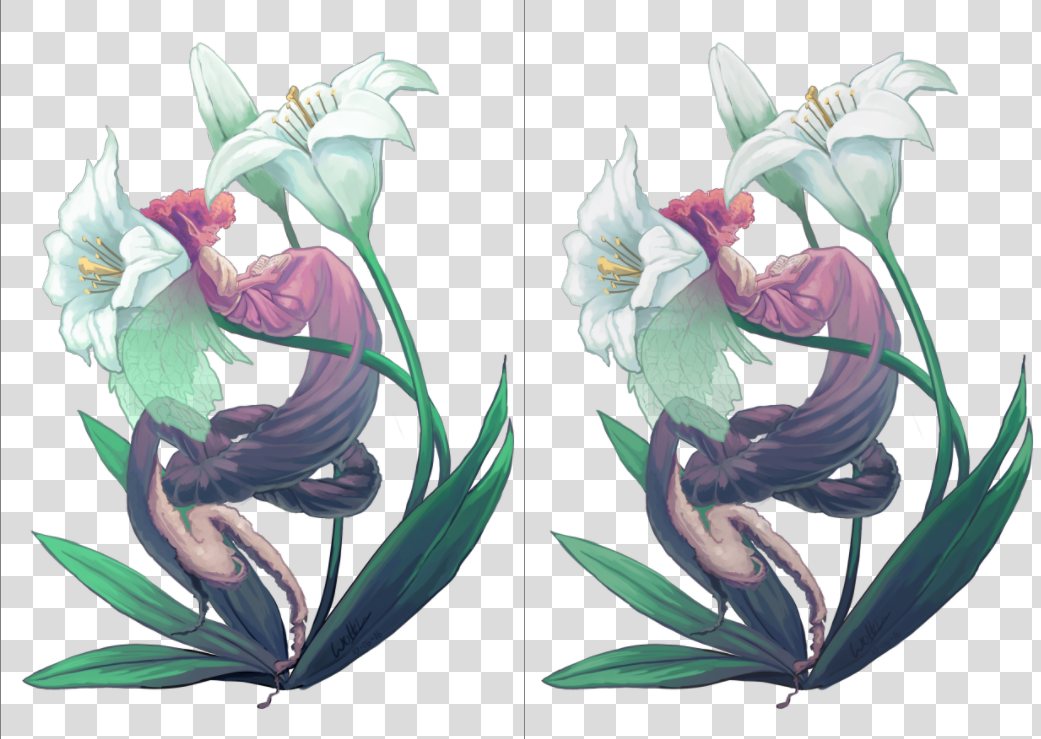
Solda özgün, sağda ekran provasının açık olduğu bir görünüm. Gerçekten parlak renklerin bulunmaması nedeniyle fark çok incedir; ancak ekranla prova edilmiş sürümde çiçeklerin beyazları biraz daha az mavimsi ve yaprakların yeşillikleri biraz daha az doygundur.
Kontrol + Y kısayolunu kullanarak herhangi bir görüntüde ekran provası özelliğini açıp kapatabilirsiniz. Diğer programlardan farklı olarak, bu özellik görünüm bazındadır, böylece görüntünüzü prova edilmemiş ve prova edilmiş olarak yan yana inceleyebilirsiniz. Prova yapılandırması ayrıca görüntü başına da ayarlanabilir ve .kra dosyasına kaydedilebilir. Bunun için, bölümündeki prova seçeneklerinde Ekran Provası yapılandırmasını görselde depola seçeneğini etkinleştirmeniz yeterlidir. Bu kutu işaretlenmemişse Krita, bölümündeki genel ayarları kullanacaktır (daha fazla bilgi için <color_management_settings_softproofing> bölümüne bakın).
Not
Ekran Provası yapılandırmasını görselde depola etkinleştirildiğinde Krita, tüm ICC profilini .kra dosyasına gömer. Bu ICC profili kimi çıkış aygıtları için büyük olabilir, özellikle CMYK olanlar için.
Buradan aşağıdaki seçenekleri ayarlayabilirsiniz:
- Model, Profil
Bunlardan sadece profil gerçekten önemlidir. Bu, prova yaptığınız profil olarak hizmet eder. Profesyonel bir baskı iş akışında, bu profil matbaa tarafından belirlenmelidir.
- Sunma Amacı
Görseli baskı öncesi çıktı aygıtı profiline dönüştürmek için kullanılan amacı ayarlayın. Bu, renk yönetimli iş akışı ile belirtilen amaçlarla aynı seçenekleri kullanır. Bu amaç, baskı öncesinde matbaanızın kullandığı dönüştürme amacı ile aynı olmalıdır. Matbaanız içsel olarak herhangi bir dönüştürme yapmıyorsa dosyayı onlara göndermeden önce dönüştürmeyi kendiniz yapmalısınız.
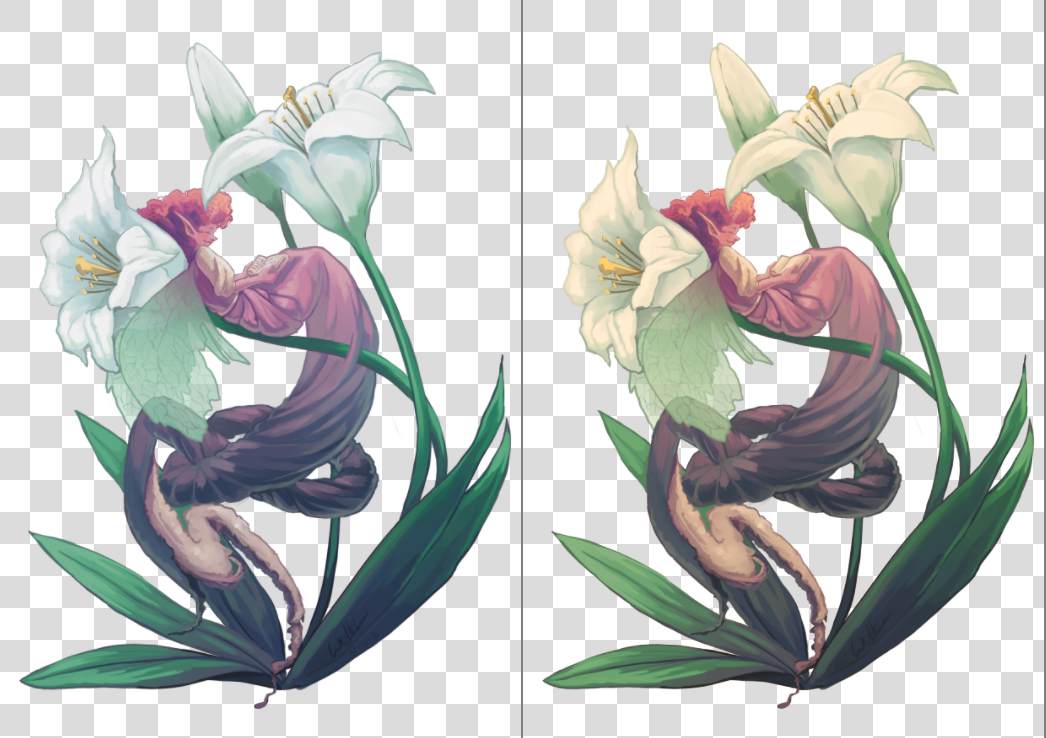
Sol: “Mutlak niyet kromatik uyarlaması” etkin olarak ekran provası yapılmış görsel. Sağ: “Mutlak niyet kromatik uyarlaması” devre dışı olarak ekran provası yapılmış görsel.
- Siyah Nokta Telafisi
Görseli baskı öncesi çıktı aygıtı profiline dönüştürürken siyah nokta telafisini etkinleştirir. Bunu kapatmak, gölge değerlerini ekranın ve baskı öncesi profilin işleyebileceği en düşük değere düşürürken, açmak siyahı ekran erimine ölçeklendirerek görüntüdeki tüm gri tonlarını gösterir. Dönüştürme İşleme Amacı gibi, bu değer de baskıevinin aygıta dönüştürme işlemi sırasında kullandığı değerle aynı olmalıdır.
- Görüntüleme Kipi
Provası yapılmış (ve büyük olasılıkla kırpılmış) alanın ekranda nasıl gösterileceğini, yani denetlenmiş çıktı aygıtı profilinden ekran profiline renkleri dönüştürmek için hangi işleme amacı ve bayrakların kullanılacağını tanımlar.
Global görüntü ayarlarını kullan, Krita’nın provalanmış alanı, içinde ayarlandığı şekilde global ayarları kullanarak sunmasını sağlar.
Kâğıt siyah–beyazına benzet, kâğıdın beyaz noktasını (veya “renk tonunu”) geçerli ekranda önizlemek için kullanılır. Başka bir deyişle, kâğıt mat, metalik veya bir tür sepya efekti içeriyorsa bu ekranınızda görünür olacaktır. Lütfen görüntüleme koşullarının beyaz noktasının yine de ekranın beyaz noktasına ayarlanacağını dikkate alın. Bu, üç beyaz nokta da aynı olmadıkça (kâğıt profilindeki beyaz nokta, ekranın yapılandırıldığı beyaz nokta ve fiziksel baskınızı aydınlatan ampulün beyaz noktası) fiziksel baskı ile ekrandaki görüntüyü görsel olarak karşılaştıramayacağınız anlamına gelir.
Özel, son dönüştürme adımını elle yapılandırmanıza olanak tanır. Amacınıza bağlı olarak işlem hattını yapılandırmak isteyebilirsiniz:
- Görselin renk gamını (veya “renk çeşitliliğini”) önizle
Sunma Amacı → Bağıl Renkölçüm
Siyah Nokta Telafisi → Etkin
Not
Gam Dışı Uyarıları’nı kullanmak istiyorsanız en iyisi onları bu kipte kullanmaktır.
- Kâğıt renginden dolayı oluşan karşıtlık bozulmalarını önizleyin.
Sunma Amacı → Mutlak Renkölçüm
Mutlak amaç kromatik uyarlaması → Etkin
Uyarı
Wayland bileşikleştiricisi kullanıyorsanız “Mutlak Renkölçüm” amacı bozuk olabilir (XWayland kipinde bile). Dahası, farklı sürümlerde farklı şekillerde davranabilir.
KWin 6.4.x ve öncesi sürümlerde Mutlak Renkölçüm, Mutlak amaç kromatik uyarlaması her zaman devre dışıymış gibi davranır. Yazıcının ve görüntü profilinin beyaz noktaları (sigChromaticAdaptationTag) uyuşmuyorsa aşırı renk açılmasına neden olabilir.
KWin 6.5.x ve sonrası sürümlerde Mutlak Renkölçüm, Mutlak amaç kromatik uyarlaması her zaman etkinmiş gibi davranır. Onay kutusunu işaretli bırakmanız koşuluyla, özellik doğru şekilde çalışacak ve karşıtlık bozulmalarını önizlemenize olanak tanıyacaktır; ancak ekran alanına renk uyarlamasını devre dışı bırakmanın gelişmiş efektlerine erişemeyeceksiniz.
Bu, Wayland platform belirtiminden dolayı oluşan bir sorundur; çözüm tartışmaları için bu sayfaya bakın.
- Gam Uyarısı
Gam Dışı Uyarıları’nın rengini ayarlayın.
Krita’nın kullandığı öntanımlıları içinde ayarlayabilirsiniz.
Bunu düzgün bir şekilde yapılandırmak için yazdırılacak (ve düzgün kurulmuş bir yazıcı tarafından yazdırılan) bir sınama görseli yapmanız ve bununla karşılaştırmanız ve ardından prova seçeneklerinde görselin gerçek hayattaki kopyayla karşılaştırıldığında yaklaşık olarak nasıl göründüğünü belirlemeniz önerilir.
Gam Dışı Uyarısı
Gam dışı uyarısı veya gam alarmı, Ekran Provası’na ek bir seçenektir: Ortaya çıkan rengi ayarlanan alarm rengiyle değiştirerek hangi renklerin kırpıldığını görmenizi sağlar.
Bu, belirli karşıtlıkların nerede kaybolduğunu belirlemek ve onu daha az karşıtlıklı bir görsele yavaşça değiştirmenize olanak sağlamak için yararlı olabilir.
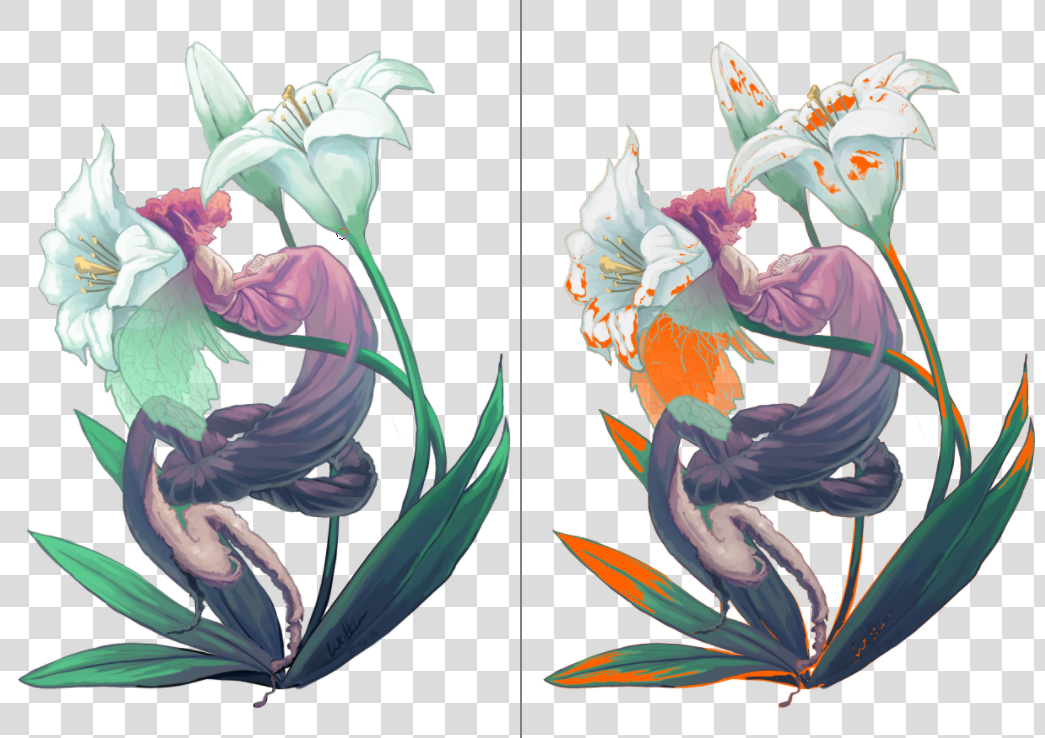
Sol: Özgün görselin bulunduğu bir görünüm, Sağ: Gam dışı uyarıları ve ekran provasının açık olduğu bir görünüm. Krita, KRA dosyasına gam uyarısı rengini ekran provası ayarlarıyla birlikte kaydeder. Bu nedenle, geçerli görseliniz için en uygun olabileceğini düşündüğünüz bir rengi seçin.
Gam Uyarılarını Kontrol + Üst Karakter + Y kısayoluyla etkinleştirebilirsiniz; ancak tam olarak çalışması için ekran provasının etkinleştirilmesi gerekir.
Not
Ekran Provası, kayan noktalı uzaylarda düzgün çalışmaz ve bunu zorlamaya çalışmak yanlış gam alarmlarına neden olabilir. Bu nedenle devre dışıdır.
Uyarı
Gam Uyarıları, bazen gölgelerde doğrusal profiller için garip uyarılar oluşturabilir. Bu, LittleCMS içinde bilinen bir hatadır, ek bilgi için buraya bakın.