
Couleur
Similaire aux filtres « Ajustement », les filtres de couleurs sont des opérations sur les couleurs sur l'ensemble de l'image.
Couleur vers alpha
Ce filtre vous permet de rendre transparente (Alpha) une unique couleur. Par défaut, quand vous exécutez ce filtre, le blanc est sélectionné. Vous pouvez sélectionner une couleur que vous voulez rendre transparente, à partir du sélecteur de couleurs.
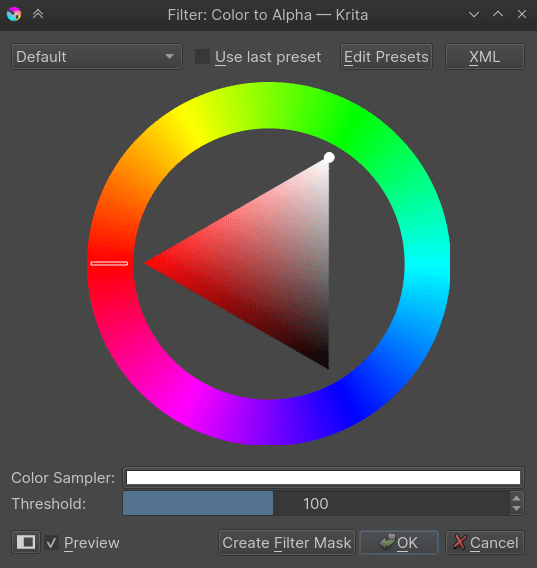
Le « Seuil » indique combien d'autres couleurs seront prises en compte pour le mélange entre couleurs supprimées et non supprimées. Par exemple, avec un seuil défini à 255 et la couleur supprimée défini à Blanc, un gris à 50 % sera pris en compte pour le mélange noir + blanc et alors, transformé en un noir transparent à 50 %.
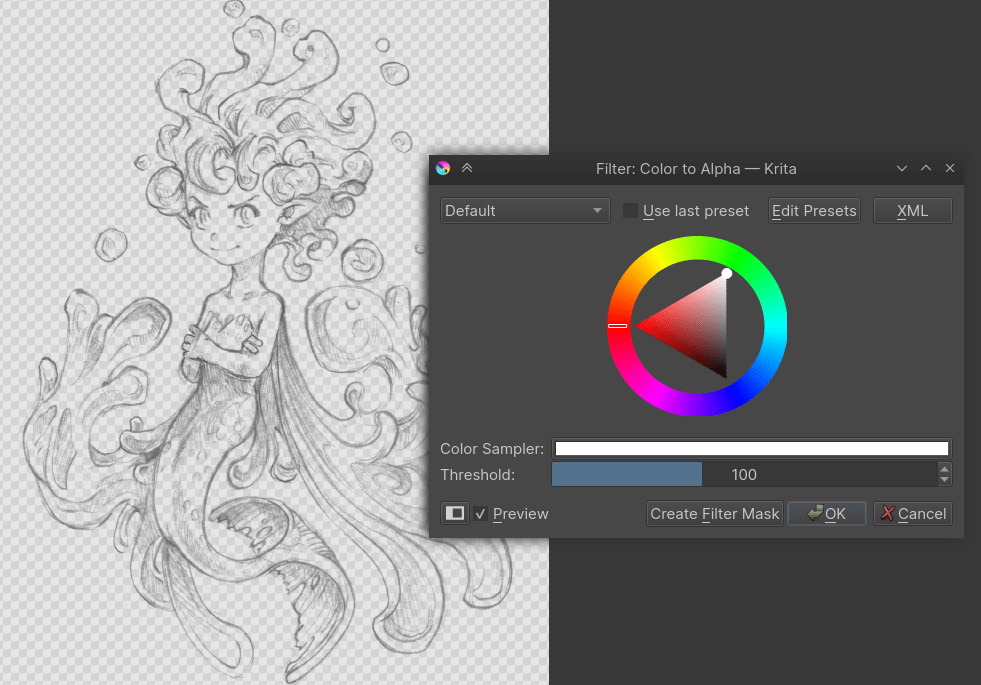
Ce filtre est vraiment utile pour la séparation d'un dessin au trait de l'arrière-plan blanc.
Fast Color Overlay
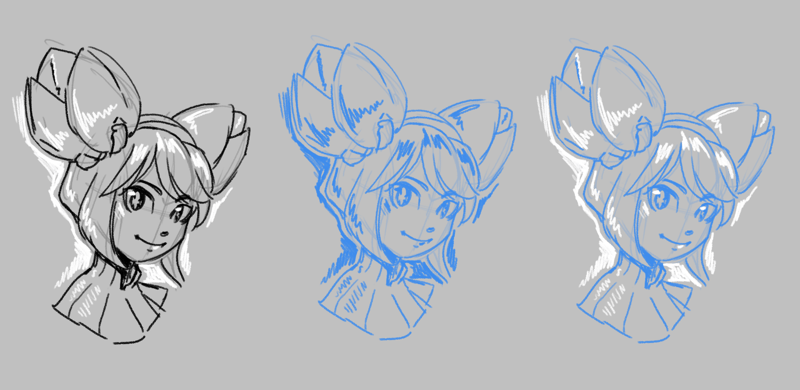
Left: original sketch. Center: Sketch with Fast Color Overlay filter and Normal blending, Right: Sketch with Fast Color Overlay filter and Tint blending.
Ajouté dans la version 5.3.
Tints an image with a single color. It is similar to Ajustement TSV/TSL with Colorize enabled, but much faster.
- Couleur
The color to tint the image with.
- Blend Mode
The blend mode to use to mix the color with the existing image.
- Normal
This applied the color like a regular layer onto the input. This is useful for images where you want to have all opaque pixels the specified color, asif the layer were a single-color layer.
- Tint
Interpolates between white and the current color. This is useful for images where you want to preserve any mid-tones.
- Custom
Select any other blending mode you prefer.
- Opacity
How opaque or transparent the selected color should be.
Transfert de couleur
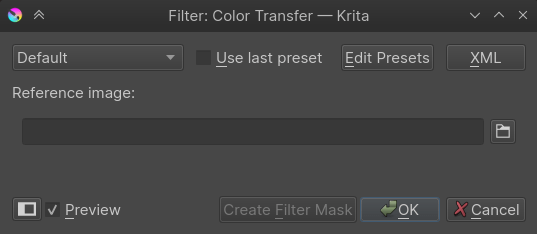
Ce filtre convertit les couleurs de l'image vers les couleurs de l'image de référence. Ceci est une façon rapide de modifier la combinaison de couleurs d'un dessin selon une image déjà enregistrée ou une image de référence.
Maximiser le canal
Ce filtre vérifie tous les canaux pour chaque couleur unique et les définit tous à zéro sauf pour la valeur la plus haute.
Minimiser le canal
Ceci est l'inverse de « Maximiser » le canal. Il vérifie tous les canaux pour chaque couleur unique et les définit tous à zéro sauf pour la valeur la plus basse.
Propagate Colors
This filter propagates, extends, the colors of [semi]opaque regions into the nearby fully transparent regions. This can be useful, for example, to automatically fill those areas in a way that there is a continuity in terms of color.
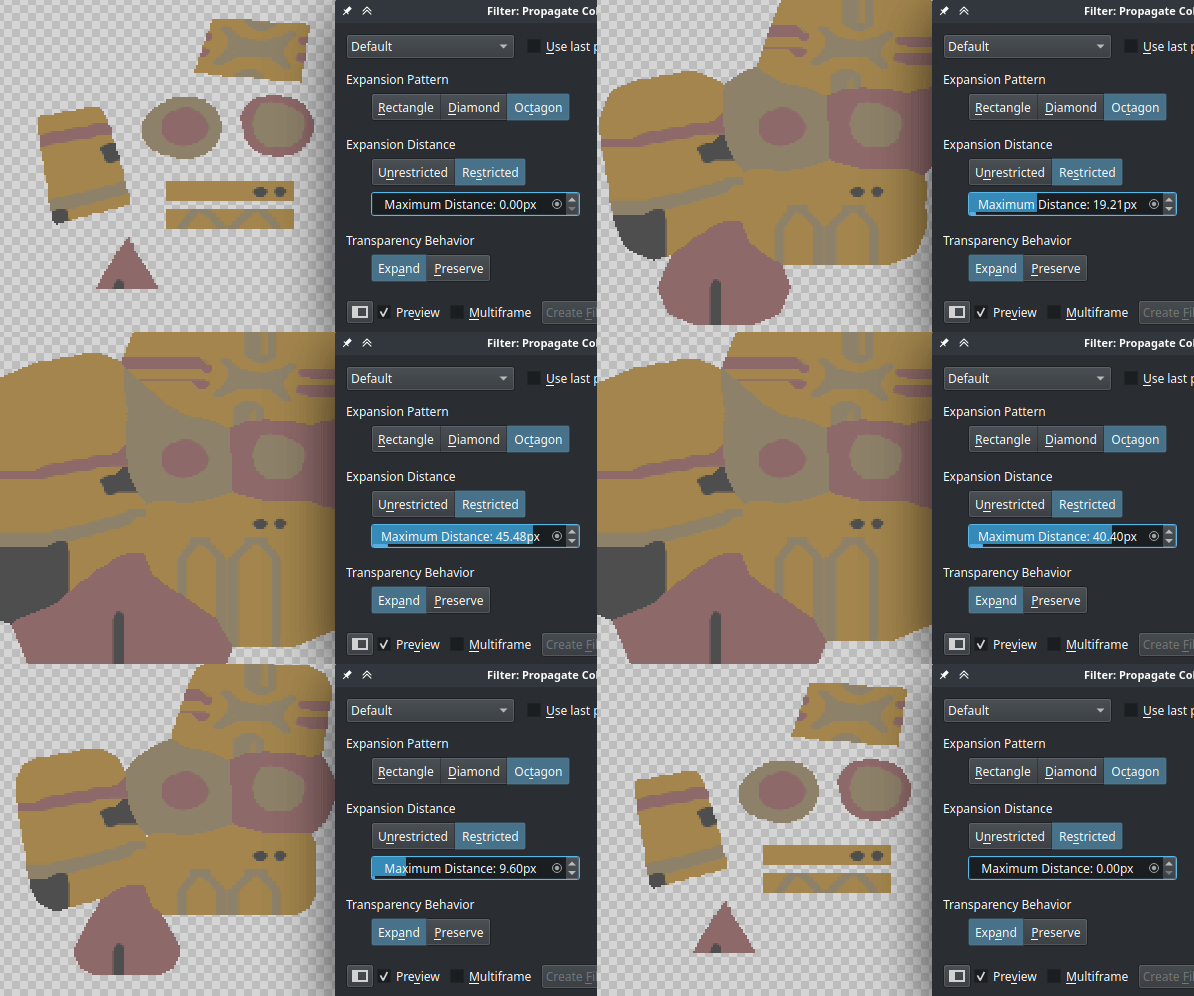
- Expansion Pattern
This option allows to choose in which directions the pixels should propagate.
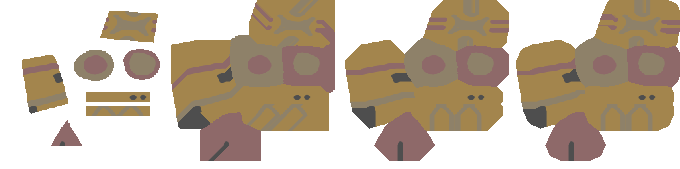
From left to right: original image; rectangle shaped expansion (expand equally to orthogonal and diagonal directions); diamond shaped expansion (expand only to orthogonal directions); octagon shaped expansion (expand to orthogonal directions and a bit less to the diagonal directions).
- Expansion Distance
The pixels can be propagated only up to a given distance, or indefinitely, so that all the transparent areas are covered end-to-end.
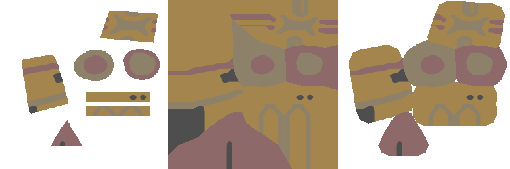
From left to right: original image; expanded image with unrestricted distance; expanded image with restricted distance.
- Transparency Behavior
This option allows control over whether the alpha channel should also be expanded or remain untouched.
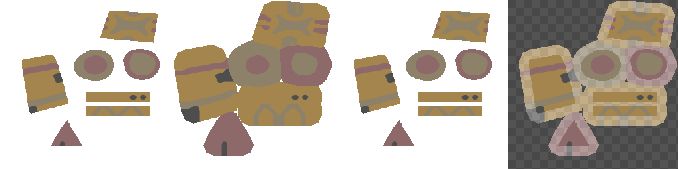
From left to right: the original image; the expanded image with expanded alpha channel; the expanded image preserving the alpha channel (note that it looks like the original one, although the color components were actually propagated into the transparent areas); image demonstrating the behavior of the previous example by applying a levels filter that makes the transparent areas semi-opaque to clearly see how the colors were truly propagated.